
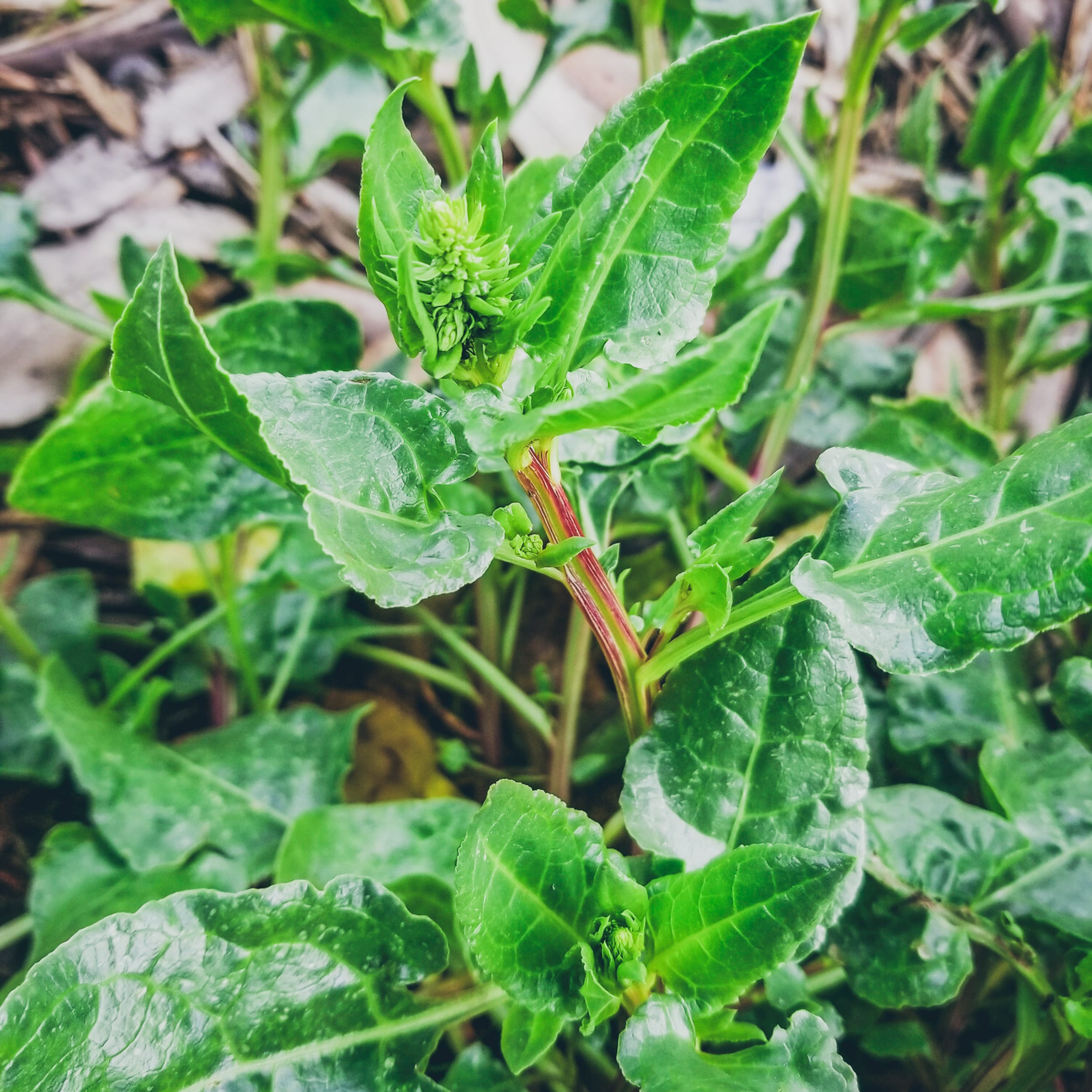
Sea Beet (Perennial spinach alternative)
£5.75
Sea Beet (Beta vulgaris subsp. maritima)
Sea Beet is the wild ancestor of all modern cultivated beets. It forms a sprawling rosette of thick, glossy, dark green leaves that can be used as a perennial alternative to true spinach. The leaves share a similar flavour to chard but are thicker, more succulent and have a naturally salty, mineral-rich edge. Its adapted to thrive in highly saline environments. In its natural coastal habitat, its deep taproot anchors it against harsh winds and shifting shingle, this deep-rooting habit allows it to draw moisture from highly free-draining, sandy soils, making it exceptionally resilient to prolonged drought.
Perennial | 30/60cm tall | Full sun | Succulent, salty edible leaves | Exceptionally hardy and drought-tolerant
Email when stock available
Sea Beet (Beta vulgaris subsp. maritima)
1 well-established plant in a 1liter pot, sent in plastic-free packaging. A resilient, coastal perennial, prized for its succulent, spinach-like foliage and exceptional hardiness.
Perennial | 30/60cm tall | Full sun | Succulent, salty edible leaves | Exceptionally hardy and drought-tolerant
Sea Beet is the rugged, wild ancestor of all modern cultivated beets, including beetroot, Swiss chard, and sugar beet. It forms a sprawling rosette of thick, glossy, dark green leaves. It is highly valued as a robust, perennial alternative to true spinach. The leaves share a similar flavour profile to chard but possess a thicker, more succulent texture and a naturally salty, mineral-rich edge. They can be harvested continuously throughout the growing season, eaten raw in salads when young, or wilted into warm dishes. Like regular spinach, the leaves contain natural oxalic acid, which is effectively reduced by brief cooking or blanching.
Sea Beet is classified as a halophyte, meaning it is scientifically adapted to thrive in highly saline environments. In its natural coastal habitat, its deep taproot anchors it against harsh winds and shifting shingle, playing a vital role in stabilising loose coastal soils. It provides a dense structural habitat and acts as a documented larval food source for native UK moth species. Its deep-rooting habit allows it to draw moisture from highly free-draining, sandy soils, making it exceptionally resilient to prolonged drought.
This wild edible is incredibly low-maintenance. It is fully hardy across the UK, and because of its robust coastal genetics, it frequently retains its foliage through milder winters, providing a valuable source of fresh greens when traditional crops are dormant. It performs best in full sun and well-drained soil, easily tolerating poor, sandy, or gravelly conditions. Although individual plants can sometimes be short-lived, it self-seeds readily if the flower stalks are left intact, ensuring a permanent, low-effort supply of gourmet wild greens.
* Oxalic acid – while generally safe in normal dietary amounts, excessive consumption of raw foods high in oxalic acid can interfere with mineral absorption and contribute to kidney stone formation in susceptible individuals.
Delivery Information
All plants are carefully packed and sent in plastic-free packaging to protect both the plant and the environment. Plants are dispatched promptly so they arrive fresh, healthy, and ready to plant.
We ship orders using a tracked 24-hour delivery service, helping to minimise time in transit and reduce stress on the plant. Orders are packed by hand at the nursery, and we aim to dispatch early in the week to avoid delays over weekends.
If you have any questions about delivery timing or combining orders, please get in touch before ordering and we will be happy to help.
To find out more about other plants for your garden visit – https://dyfiplants.substack.com

Stuart –
Fast delivery, healthy little plant. Well packed. No Issues.
Daniela Simpson (verified owner) –
Love for the plants and passion for growing shines in abundance from the plants I have received. Delivered well packed and in great condition. Now I just need to read up on how to plant these properly in Huw’s book to do them justice and hopefully I’ll have little permaculture garden of my own for years to come. Great job Huw & everyone at Dyfi for inspiration and excellent YouTube chanel too