
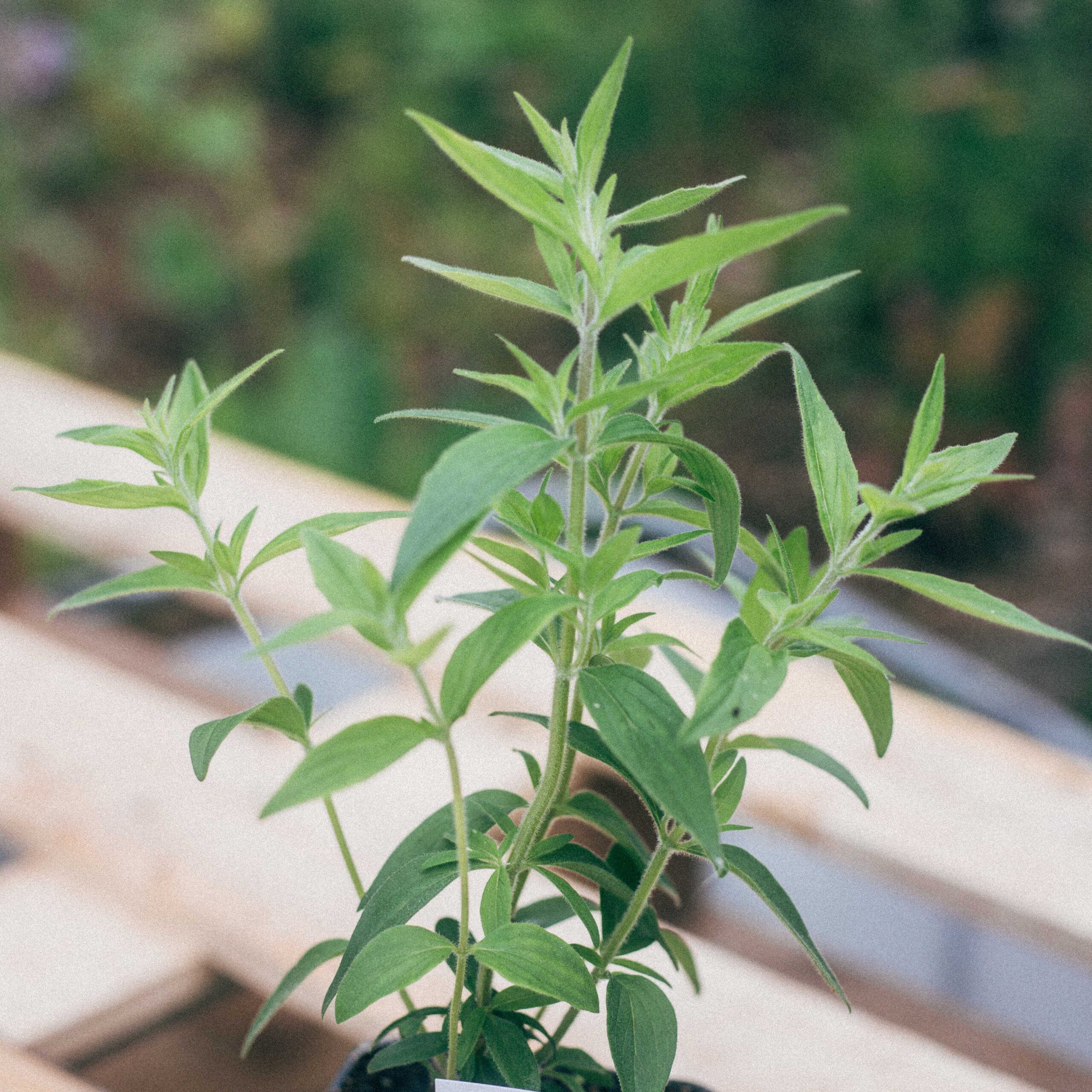
Mountain Mint (Clump forming)
£4.50
Mountain Mint (Pycnanthemum muticum)
We like to grow Mountain Mint to attract pollinators to our garden, while being able to harvest a complex, spicy-mint flavour leaf from a plant that does not aggressively overrun our borders. Think of Mountain Mint as a spicier, wilder cross between standard spearmint and oregano, but with a much better garden temperament. Unlike true mint (Mentha), which runs underground and can dominate borders if unchecked, Mountain Mint forms a dense, slowly expanding clump, topped with pretty, silvery foliage.
Perennial | 60/90cm tall | Full sun to partial shade | Edible aromatic foliage | Great pollinator forage and architectural silver bracts
Email when stock available
Mountain Mint (Pycnanthemum muticum)
1 well-established plant in a 9cm pot, sent in plastic-free packaging. A highly aromatic, clump-forming herbaceous perennial, prized for its striking frosted-silver foliage, complex spicy-mint flavour, and use as a pollinator attractant.
Perennial | 60/90cm tall | Full sun to partial shade | Edible aromatic foliage | Great pollinator forage and architectural silver bracts
We like to grow Mountain Mint to attract pollinators to our garden, while being able to harvest a complex, spicy-mint flavour leaf from a plant that does not aggressively overrun our borders. Think of Mountain Mint as a spicier, wilder cross between standard spearmint and oregano, but with a much better garden temperament. Unlike true mint (Mentha), which runs underground and can dominate borders if unchecked, Mountain Mint forms a dense, slowly expanding clump, topped with pretty, silvery foliage. Harvesting is a simple “cut-and-come-again” process. Snip off the tender young leaves and stem tips from late spring onwards. The foliage has a menthol flavour with earthy, thyme-like undertones. It can be dried for soothing winter teas or used fresh as a seasoning. The tiny late-summer flowers are also edible and make a fiery, minty garnish.
Pycnanthemum muticum is native to the woodlands and meadows of North America. It is highly adaptable but thrives best in full sun to partial shade with moist, well-draining soil. it is pretty tolerant of heavy clay soils that retain winter moisture, and once established, its deep root system allows it to tolerate summer droughts. Holding an RHS H6 hardiness rating, this plant is completely frost-hardy across the UK, easily surviving temperatures down to -20°C. It is incredibly resilient, suffering from minimal pest or disease issues due to its high concentration of volatile essential oils. Maintenance is minimal: simply cut the dead, woody stems right back to the base in late winter or early spring to make way for the fresh, aromatic new growth.
As it prepares to bloom in mid-summer, the upper leaves (bracts) physically change colour, turning a brilliant, frosted metallic silver that looks as though the plant has been dusted with snow. It is a heavyweight. The dense clusters of tiny white and pale pink tubular flowers attract a diversity of life, including honeybees, solitary bees, vital predatory wasps, hoverflies, and butterflies.

Reviews
There are no reviews yet.