
Korean Aster ‘Chamchwi’ (Woodland Edible Perennial)
£6.75
Korean Aster ‘Chamchwi’ (Aster scaber / Doellingeria scabra)
Aster scaber (now officially reclassified in many botanical databases as Doellingeria scabra) is a resilient member of the Asteraceae family, native to the woodland margins and grassy slopes of East Asia. In the kitchen, the young, heart-shaped basal leaves and emerging spring shoots are harvested before the plant stems elongate. They possess a profoundly aromatic, slightly bitter, and deeply herbaceous flavour profile. Culinary best practice dictates that the leaves be blanched in boiling water; this rapidly tenderises the foliage, mellows the astringent bitter compounds, and readies the greens for seasoning or drying for winter use.
Perennial | 60/120cm tall | Partial shade to full sun | Edible aromatic spring foliage | Late-season pollinator forage and fully hardy
Email when stock available
Korean Aster ‘Chamchwi’ (Aster scaber / Doellingeria scabra)
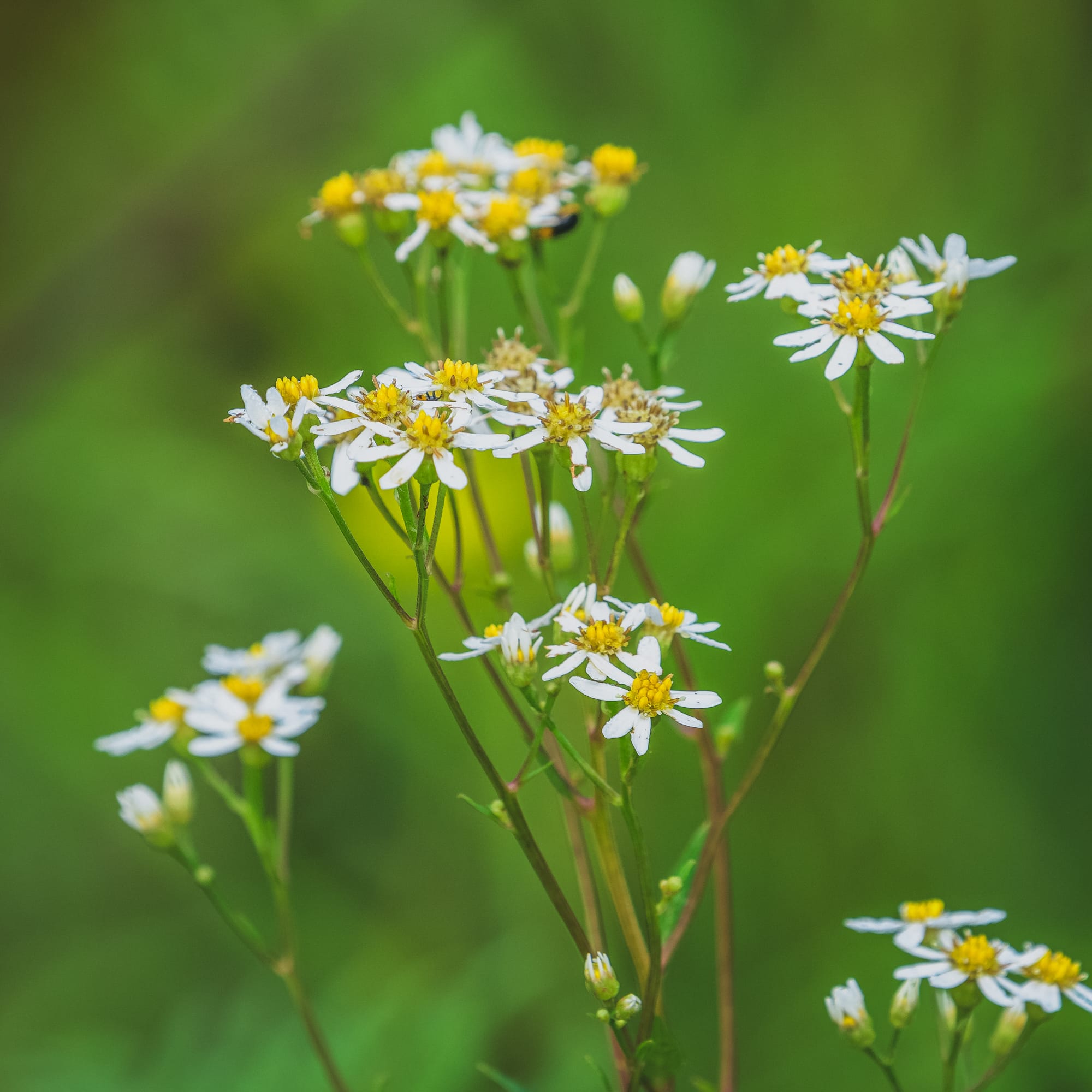
1 well-established plant in a 1Litre pot, sent in plastic-free packaging. A highly revered, robust woodland perennial, prized as the premier authentic species for Korean chwinamul and valued for its elegant, late-summer white daisy blooms.
Perennial | 60/120cm tall | Partial shade to full sun | Edible aromatic spring foliage | Late-season pollinator forage and fully hardy
Aster scaber (now officially reclassified in many botanical databases as Doellingeria scabra) is a resilient member of the Asteraceae family, native to the woodland margins and grassy slopes of East Asia. In the kitchen, the young, heart-shaped basal leaves and emerging spring shoots are harvested before the plant stems elongate. They possess a profoundly aromatic, slightly bitter, and deeply herbaceous flavour profile. Culinary best practice dictates that the leaves be blanched in boiling water; this rapidly tenderises the foliage, mellows the astringent bitter compounds, and readies the greens for seasoning or drying for winter use.
Ecologically, A. scaber provides critical late-season support for local biodiversity. Unlike Aster koraiensis, which produces blue/purple blooms, this species erupts in late summer through autumn with branching sprays of delicate, starry white flowers featuring prominent bright yellow central disks. It’s fibrous root system forms dense, weed-suppressing clumps, making it an exceptional, low-maintenance groundcover for the dappled shade of a forest garden.
This plant is practically indestructible and highly adaptable to cooler maritime climates. Holding an RHS H7 hardiness rating, it is fully frost-hardy across the UK and will effortlessly survive extreme winter temperatures well below -20°C, dying back entirely to a dormant underground crown. It thrives in moist, well-draining, humus-rich soil and performs beautifully in the partial, dappled shade of a woodland edge, though it will tolerate full sun if the soil does not dry out completely in high summer. To maintain a vigorous, healthy crop and encourage an abundance of tender new basal leaves for the kitchen, we lift and divide the mature clumps every three to four years during the dormant winter season.

Reviews
There are no reviews yet.